






Ahmad Morshedloo, Contemporary Iranian Painter
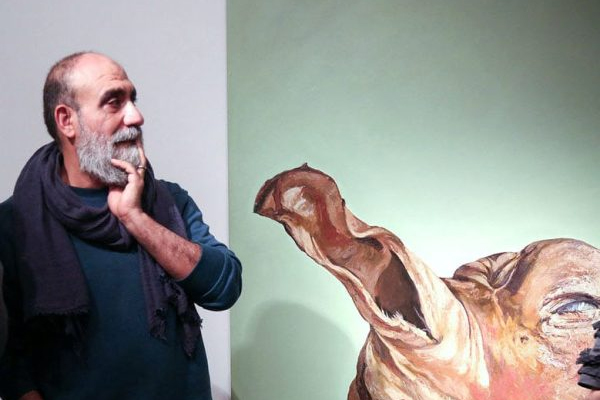
Ahmad Morshedloo, Contemporary Iranian Painter
Ahmad Morshedloo is one of the prominent painters of the contemporary generation in Iran, known for his large-scale portraits and figurative works. His works typically present images of ordinary people—women, men, and marginalized social groups—in a realistic yet thought-provoking format. His compassionate gaze towards contemporary humans is a blend of empathy, social critique, and an exploration of individual and collective identity. Many of his works are formed based on photographs or field notes; a combination of direct observation and artistic processing that lends visual power and narrative quality to his works.
Biography and Artistic Background
Birth and Education
- Birthplace and Year: Born in Mashhad (origin/place of birth recorded), circa 1973 (1352).
- Education: He completed his bachelor’s and master’s studies in painting in Iran; he received his Master of Arts (MA) in painting from the University of Art/Islamic Azad University (sources mention MA painting 2001).
Beginning of Artistic Activity
Morshedloo became active in the Iranian art scene from the late 1370s / late 1990s and has had a steady presence in galleries, group, and solo exhibitions in Iran and abroad since the early 21st century. His first solo exhibitions were held in Tehran, and subsequently, his works were presented in international exhibitions and collections.
Artistic Style and Techniques

Overall Approach and Recurring Themes
- Focus on the Human Figure: Ordinary people of society, marginalized residents, daily routines, and portraits that often convey a sense of stillness or contemplation. These elements give the works a strong social and human weight.
- Examination of Social and Identity Themes: Morshedloo’s works often address issues of identity, collective loneliness, and everyday narratives; not just as a visual record, but as a reflection of social and historical conditions.
Techniques and Media
- Oil on Canvas, Acrylic, and Ink/Pen on Cards and Cardboards Mounted on Canvas: Morshedloo uses various techniques; from large-scale oil paintings to precise pen-and-ink drawings on cardboard that are later mounted on canvas.
- Large-Scale Structure: His works often have large dimensions—sometimes multi-panel pieces—which create a stronger physical presence and visual experience for the audience.
Visual Language
- Realism with Contemplative Elements: A technically realistic surface but with atmospheres that lead to contemplation and provoke questions about the human condition.
- Combination of Photography and Field Observation: Many works are created based on documentary photos or reference photos; but Morshedloo’s artistic processing transforms them from mere documentation into paintings possessing narrative and semantic layers.
Significant Works and Collections
Important Collections and Series
- Collections dedicated to images of ordinary men and women; collections focusing on urban youth and contemporary urban culture.
Recognized Works
- Large-scale five-piece and multi-panel works displayed in recent solo exhibitions at galleries (e.g., Hoor Gallery in Tehran). These works are prominent examples of his use of composition, scale, and social themes.
Presence in Collections and Auctions
- Morshedloo’s works are held in important private and museum collections; including the Tehran Museum of Contemporary Art and the Saatchi Collection—which indicates his recognition in both domestic and international arenas.
- His works have also been offered at auctions; auction reports show that the realized prices for his works vary and have reached up to tens of thousands of dollars (examples and figures: auction information and MutualArt).
Exhibitions, Biennials, and International Presence

Exhibitions and Fairs (Selection)
- Participation in numerous group and solo exhibitions in Tehran and other cities in Iran.
- Presence in international exhibitions and art fairs (examples: Saatchi Gallery London / “Unveiled: New Art from the Middle East”; participation in projects and lists that showcased contemporary Iranian artists). Presence on the international scene helped his works be seen in museums and collections.
Participation in Major Events
- Morshedloo has participated in some important regional and international events; examples of participation in reputable exhibitions that introduced Iranian artists. (For precise exhibition details by year, one can refer to gallery sources and exhibition archives.)
Thematic Analysis of Works
Everyday Humans as the Central Subject
Morshedloo often depicts ordinary faces and bodies; without exaggerated theatricality, but with a strong presence that compels the viewer to empathize or rethink. His approach moves from mere recording to narrating the living and social situations of individuals.
Silence, Stillness, and “Passivity” as a Central Idea
In writings and critiques of his works, it has often been stated that “passivity” or the static state of the subjects is one of the central axes; by depicting this stillness, Morshedloo raises questions about the role of the individual in modern society and the ratio of action/inaction.
The technical combination—from precise drawing on cardboard to large-scale oil painting—allows him to convey the details and texture of everyday life with visual intensity. Thus, the technical form itself becomes a carrier of meaning.
Biography and Activities
Selected Exhibitions and Prominent Critiques
- Exhibition “Unveiled: New Art from the Middle East” (Saatchi Gallery, London) — One of the exhibitions that played a major role in introducing Morshedloo to international audiences. Presence in this type of event elevates the artist’s position in the market and exhibition circuit.
- Domestic Solo Exhibitions (e.g., Liam, Hoor, and Asar Galleries in Tehran): His recent solo exhibitions included large-scale works and collections focused on social issues, which were noticed by critics and audiences.
Art Market and Auction Position
- Morshedloo’s works have also been active in the art market: the registration of works in auctions and price reports indicates that there has been demand for his works, and prices have varied based on size, technique, and exhibition history. Some sales have been recorded in significant price ranges, indicating his commercial position. (Price information and sales history are listed on sites like MutualArt and ArtChart).
Morshedloo’s Place in Contemporary Iranian Art
Ahmad Morshedloo should be considered a serious representative of the social realism movement in contemporary Iranian painting; an artist who, with a large-scale structure, precise technique, and a human—sometimes critical—perspective on subjects, has managed to have a distinct voice in today’s Iranian art. His works are attended to in the domestic scene and have been seen in international markets and events; a combination that solidifies his position as an important contemporary figure.