








Musicians Feel Pain Differently Than Others
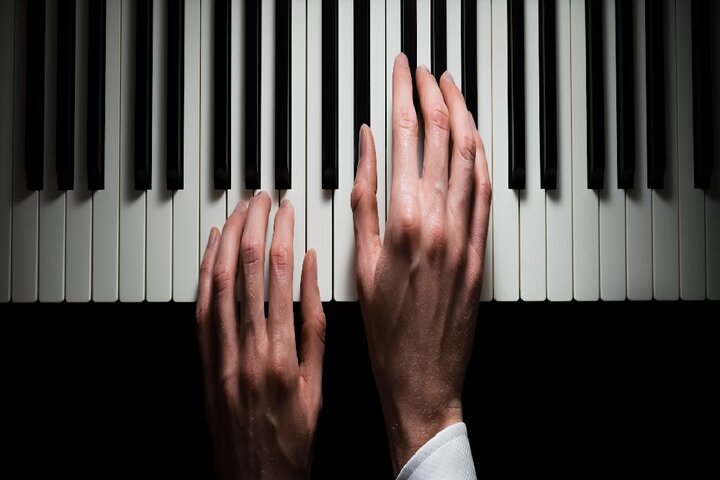
Danish researchers have discovered that musicians perceive pain differently from other individuals.
Sohreh-e Honar Iran, citing ISNA News Agency, reports that it is clear that learning to play a musical instrument can have benefits far beyond just musical ability. In fact, research shows that this is an excellent activity for the brain, which can strengthen fine motor skills, language learning, speech, and memory, and even help keep our brains younger.
According to The Conversation, Anna Zamorano, an associate professor at Aarhus University in Denmark, has published an article about her new research examining the impact of music on pain perception.
Below, we read the article written by Zamorano.
After years of working with musicians and observing how they continue their music education despite experiencing pain from performing thousands of repetitive movements, I wondered to myself: If music education can reshape the brain in many ways, could it also affect how musicians perceive pain? This is the question my colleagues and I sought to answer in our new research.
Scientists currently know that pain activates several responses in our bodies and brains, changing our attention and thoughts as well as how we move and behave. For example, if you touch a hot frying pan, the pain causes you to pull your hand back before you get seriously burned.
Pain also changes our brain activity. In fact, pain usually reduces the activity of the brain’s motor cortex, which controls muscles, helping to prevent overuse of an injured body part.
These responses help prevent the injury from worsening. Thus, pain is a protective signal that helps us in the short term, but if the pain continues for a longer period and the brain sends these “don’t move” signals for a long time, the situation can deteriorate. For example, if you twist your ankle and do not use it for weeks, your mobility decreases, and brain activity in areas related to pain control becomes disrupted. This can increase the level of suffering and pain in the long run.
Furthermore, research has shown that chronic pain can shrink our brain maps, and this shrinking is associated with worse pain. Although it is clear that some people experience more pain when their brain maps shrink, not everyone is affected in the same way. Some individuals can tolerate pain better, and their brains have less sensitivity to pain. Scientists do not yet fully understand why this happens.
In this research, we wanted to investigate whether music education and all the resulting brain changes could affect how musicians feel and cope with pain. To do this, we deliberately induced hand pain in musicians and non-musicians over several days to see if there was a difference in how they reacted to pain.
To safely simulate muscle pain, we used a compound called Nerve Growth Factor. This factor is a protein that usually keeps nerves healthy, but when injected into hand muscles, it causes them to ache for several days; especially if the hand moves. This safe, temporary compound causes no harm.
We then used a method called “Transcranial Magnetic Stimulation” to measure brain activity. In this method, small magnetic pulses are sent to the brain, and we used these signals to create a map of how the brain controls the hand. We did this for all research participants.
We created hand maps before inducing pain and measured them again two days later and eight days later to see if pain had changed how the brain functioned.
When we compared the brains of musicians and non-musicians, we saw significant differences. Even before inducing pain, we found that the hand maps of musicians in the brain were more precise, and the more hours they had practiced, the more precise these maps became.
After inducing pain, musicians reported that they experienced less discomfort overall. While the hand map in the brains of non-musicians shrank only after two days of pain, the hand map in the musicians’ brains remained unchanged. Surprisingly, the more hours of training individuals had, the less pain they felt.
This was a small experiment involving 40 people, but its results clearly showed that musicians’ brains react differently to pain. Their training seems to have provided a kind of buffer against the usual negative effects—both in terms of the amount of pain felt and how the brain’s motor areas reacted.
Of course, this result does not mean that music is a cure for chronic pain, but it shows that long-term training and experience can shape how we perceive pain. This is an exciting topic because it may help us understand why some people are more resistant to pain than others and how we can design new treatments for people suffering from pain.