







Minimalist Photography; The Power of Simplicity in the Frame
Minimalist Photography; The Power of Simplicity in the Frame
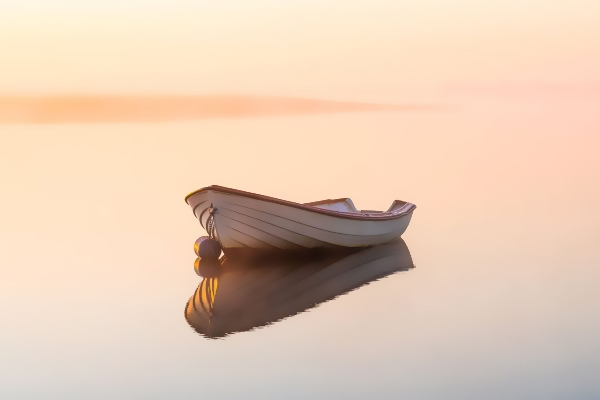
Sometimes, in a world saturated with color, form, and details, the simplest image can have the greatest impact. Minimalist photography is the art of seeing in simplicity, an art that creates the most meaning from the fewest elements. In this style, removing excess is just as important as adding details in other styles. The main goal of minimalist photography is to create a sense of calm, focus, and visual order through a judicious combination of space, color, and form.
History and Emergence of Minimalist Photography
The roots of minimalism in art date back to the 1960s; a time when visual artists and industrial designers sought a new language to express simplicity and order. However, minimalist photography emerged a bit later, in the 1970s, when photographers like Michael Kenna and Harry Callahan tried to use simple forms and pure lines to express emotion. In that era, the art world was tired of complexity and exaggeration and needed to return to the essence — to the “quiddity” of things. Minimalism in photography was a response to this need: an image that is calm, uncluttered, and precise, inviting the viewer to contemplation and silence. Today, this style has a prominent presence not only in art galleries but also in advertising, interior design, and even social media.

Features and Technical Principles of Minimalist Photography
In minimalist photography, every element must have a reason for its presence in the frame. The principle is based on simplicity, balance, and visual clarity. The key principles of this style include:
- Negative Space: The empty part of the image is as important as the subject and helps focus the eye on the main topic.
- A Clear and Specific Subject: Usually, only one visual element is placed at the center of attention.
- Limited and Coordinated Colors: Often, one or two colors with high contrast are used.
- Precise Composition: Symmetry, horizontal and vertical lines, or placing the subject in golden rule points play an important role.
- Natural and Soft Light: To create a sense of visual emptiness and simplicity.
- Clarity and Stillness: Static subjects, simple lines, and uniform textures are among the main characteristics.
Note: In minimalist photography, “less is more.” The goal is to remove distractions so the audience focuses only on the main feeling of the image.
Recommended Equipment and Settings
Complex equipment is not needed to create minimalist images; however, precision, light control, and viewing angle are extremely important.
In settings, using a medium aperture (f/8 to f/11) for greater clarity and low ISO (100 to 400) is recommended to maintain image quality.
Prominent Photographers in Minimalist Style
Some of the most famous figures in this style include:
- Michael Kenna: Known for minimalist black-and-white landscapes and long exposures.
- Harry Callahan: A pioneer in using abstract forms in simple photography.
- Hiroaki Kumagai: Famous for urban minimal compositions with vivid colors.
- Franco Fontana: An Italian photographer who elevated minimalism to its peak using strong colors and geometric forms.
- Simon Bak: With photos often consisting only of the sky and a horizon line.
Application of Minimalist Photography in Today’s World
Simplicity is always attractive, especially in today’s noisy world. Minimalist photography has various applications today:
- Advertising and Branding: To convey a sense of luxury, order, and focus on the product.
- Web Design and Graphics: Clean and minimal backgrounds give a modern feel to designs.
- Printing and Interior Decoration: Minimalist images bring a sense of peace and balance to the space.
- Social Media (like Instagram): The combination of simplicity and controlled colors attracts the audience.

Difference Between Minimalist Photography and Similar Styles
Key Tips for Beginner Photographers
- Before shooting, ask yourself: “Can I remove something?”
- Use natural light and take advantage of shadows to emphasize form.
- Keep the focus on one subject; let the spaces speak.
- Limit colors and use simple contrast.
- In editing, do not forget to remove extra elements — this is part of the minimalist process.
- Use a different viewing angle; sometimes changing a step turns a frame from busy to minimal.
- Practice to “see less but understand more.”
Conclusion
Minimalist photography teaches us that beauty is not always in complexity. Sometimes a line, a color, or even an empty space can hold a thousand meanings. In a world full of information and images, minimalism helps us learn to see again — to see simply, calmly, and deeply.
Frequently Asked Questions:
1. What exactly is minimalist photography?
It is a style of photography that emphasizes simplicity, empty spaces, and focus on a specific subject.
2. Are only black and white photos considered minimal?
No. Color is also an important part of minimalism, provided it is used simply and in a controlled manner.
3. What equipment do I need to start this style?
A regular camera and a keen eye are enough. More important than the tool is the understanding of simplicity and correct composition.
4. Can minimalist photography be done with a mobile phone?
Yes, many modern photographers capture their minimal works with a mobile phone.
5. Is minimalist photography the same as abstract photography?
No. Minimalism still relies on a real subject, whereas abstract photography may be completely unrecognizable.