






Monir Shahroudy Farmanfarmaian: The Lady of Mirrors
Monir Shahroudy Farmanfarmaian: The Lady of Mirrors
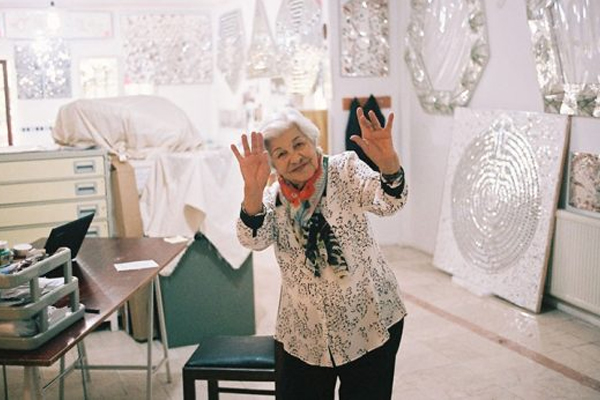
Monir Shahroudy Farmanfarmaian (1922–2019) is one of the most important figures in contemporary Iranian art, creating unique works by combining traditional Iranian arts, especially mirror work and geometric patterns, with the language of global modern art. She built a bridge between Iran’s cultural heritage and global avant-garde movements and is recognized as a pioneer of conceptual and decorative art in Iran.
Biography and Artistic Background

Monir was born on December 7, 1922, into a prominent family in Qazvin. Her childhood passed in a lush, flower-filled garden; the place where she made her first drawings of flowers and birds. With the beginning of Reza Shah’s reign, her father took a position in the parliament, and the family migrated to Tehran. After finishing high school, Monir entered the Faculty of Fine Arts, University of Tehran, and chose painting as her major.
In the late 1940s, she decided to continue her studies abroad. Initially, she considered France, but due to post-World War II conditions, she changed her destination and went to New York. She studied at Cornell University and Parsons School of Design and grew in the vibrant artistic atmosphere of 1940s and 1950s New York. In this city, she socialized with artists such as Alexander Calder, Andy Warhol, Frank Stella, and Joan Mitchell, who had a profound influence on her artistic vision.
Artistic Style and Techniques

Farmanfarmaian’s works are a blend of sacred geometry, Iranian mirror work, and Western modern art. She used to say: “Geometric form begins with a point and continues endlessly.” Inspiration from the tile work and stucco of Iranian mosques, especially Islamic architecture, became the foundation of her work.
In creating mirror volumes, she collaborated with traditional masters. Pieces of mirror were carefully cut and ground to create regular polygonal compositions. In addition, her abstract designs, collages, and monotypes are an important part of her artistic legacy.
Significant Works
- Geometric Mirror Works series created with inspiration from traditional Iranian architecture.
- “Flowers” Monotypes which won a gold medal at the 23rd Venice Biennale (1958).
- Heartache Boxes: Collages of magazine images and miniature elements created during her second migration to New York.
- Paper designs and abstract paintings which, alongside volumetric works, form an important part of her portfolio.
Exhibitions and Honors